
Epoxy vs. Polyaspartic: Which Is Right for Your Floor?
Epoxy and polyaspartic are the two workhorse chemistries in modern floor coatings. Both make excellent floors when installed over properly prepared concrete — but they behave differently, and the right choice depends on your space, your timeline and your budget.
Quick Comparison
| Factor | Epoxy | Polyaspartic |
|---|---|---|
| Cure time | 3–7 days to full cure | Return to service in as little as 24 hours |
| UV stability | Can amber in direct sunlight | UV-stable — will not yellow |
| Durability | Excellent build and impact resistance | Excellent abrasion and chemical resistance |
| Temperature range | Best in moderate temperatures | Can be installed in a wider temperature range |
| Cost | More economical | Premium |
Where Epoxy Shines
Epoxy builds thickness beautifully, self-levels well and offers outstanding value. For interior garage floors, shops and commercial floors that aren’t flooded with direct sunlight, a well-installed epoxy system is hard to beat on a budget. Curious what a system costs? See our pricing guide.
Where Polyaspartic Shines
Polyaspartic cures fast — many projects are back in service the next day. It is UV-stable, so it won’t yellow near sunny garage doors or outdoor-adjacent slabs, and it stays flexible enough to handle temperature swings without losing hardness.
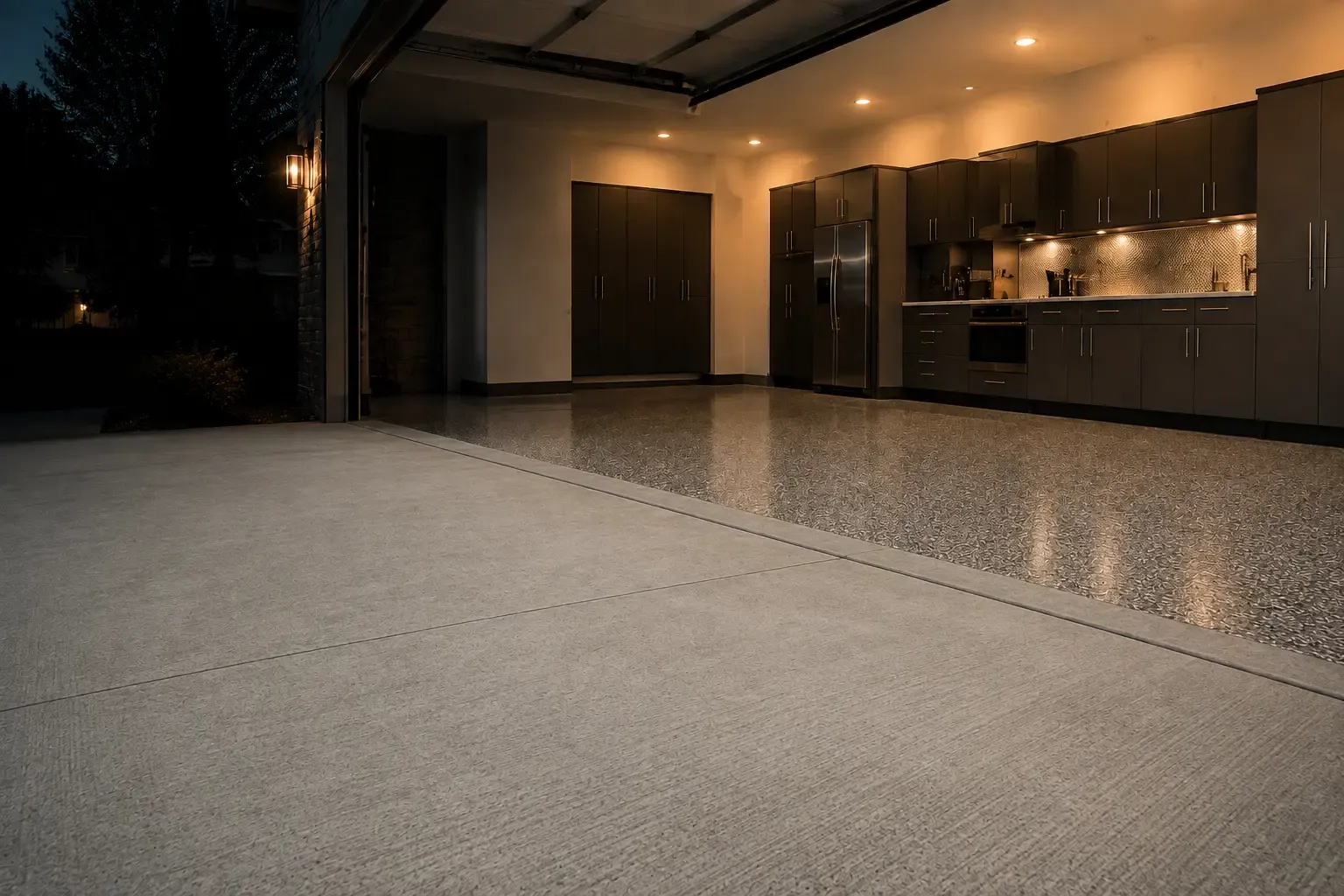
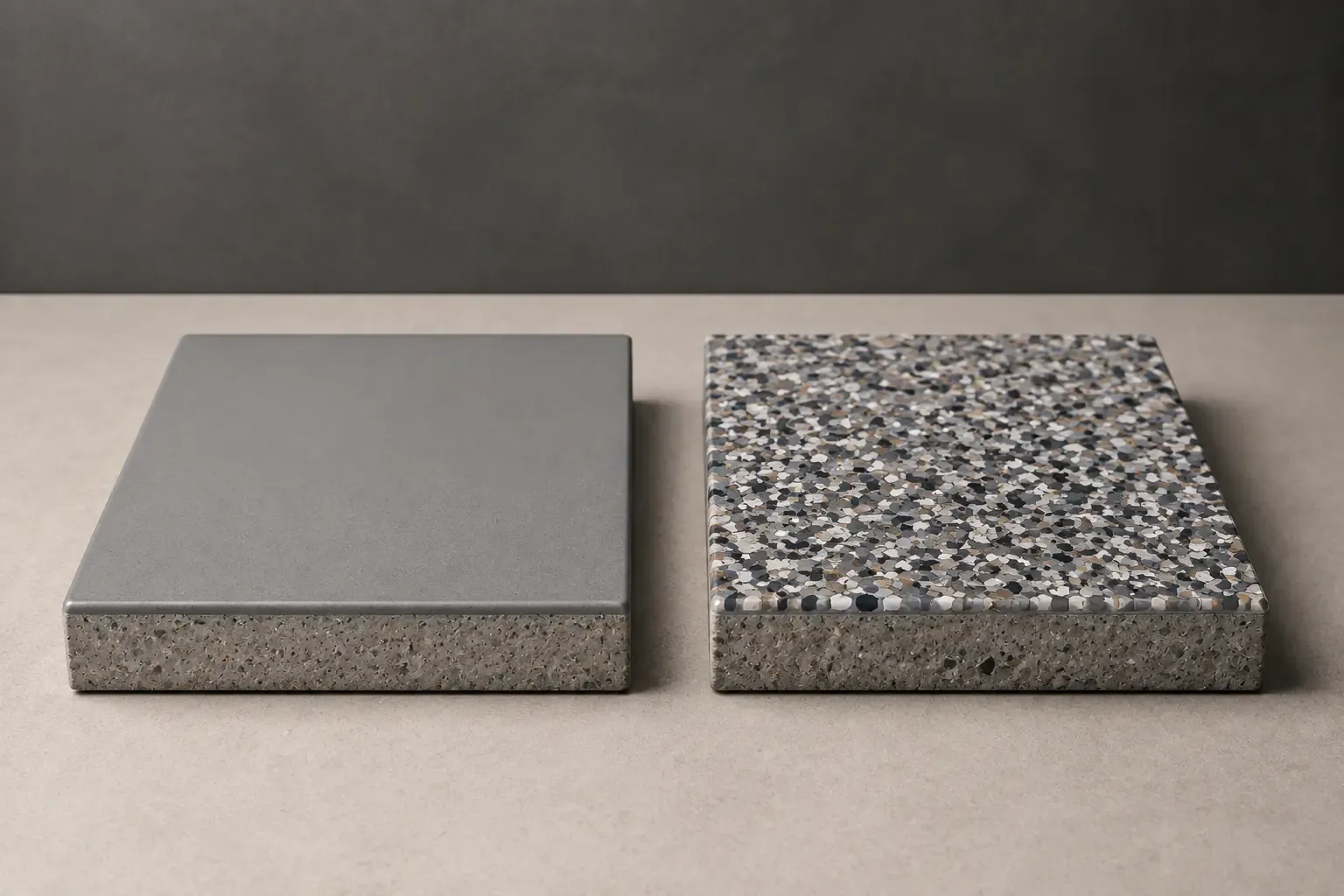
Many of our best floors use both: an epoxy base and flake broadcast for build and color, finished with a polyaspartic topcoat for UV stability and wear resistance.
So Which Should You Choose?
- Choose epoxy when budget is the priority and the floor lives indoors.
- Choose polyaspartic when you need the space back fast, the slab sees sunlight, or you want the most durable wear surface available.
- Choose a hybrid system when you want the best of both.
Every recommendation we make starts with your concrete and how you use the space. Tell us about your floor and we’ll spec the right system for it.