

Aerospace Facility Flooring in the Western Inland Empire
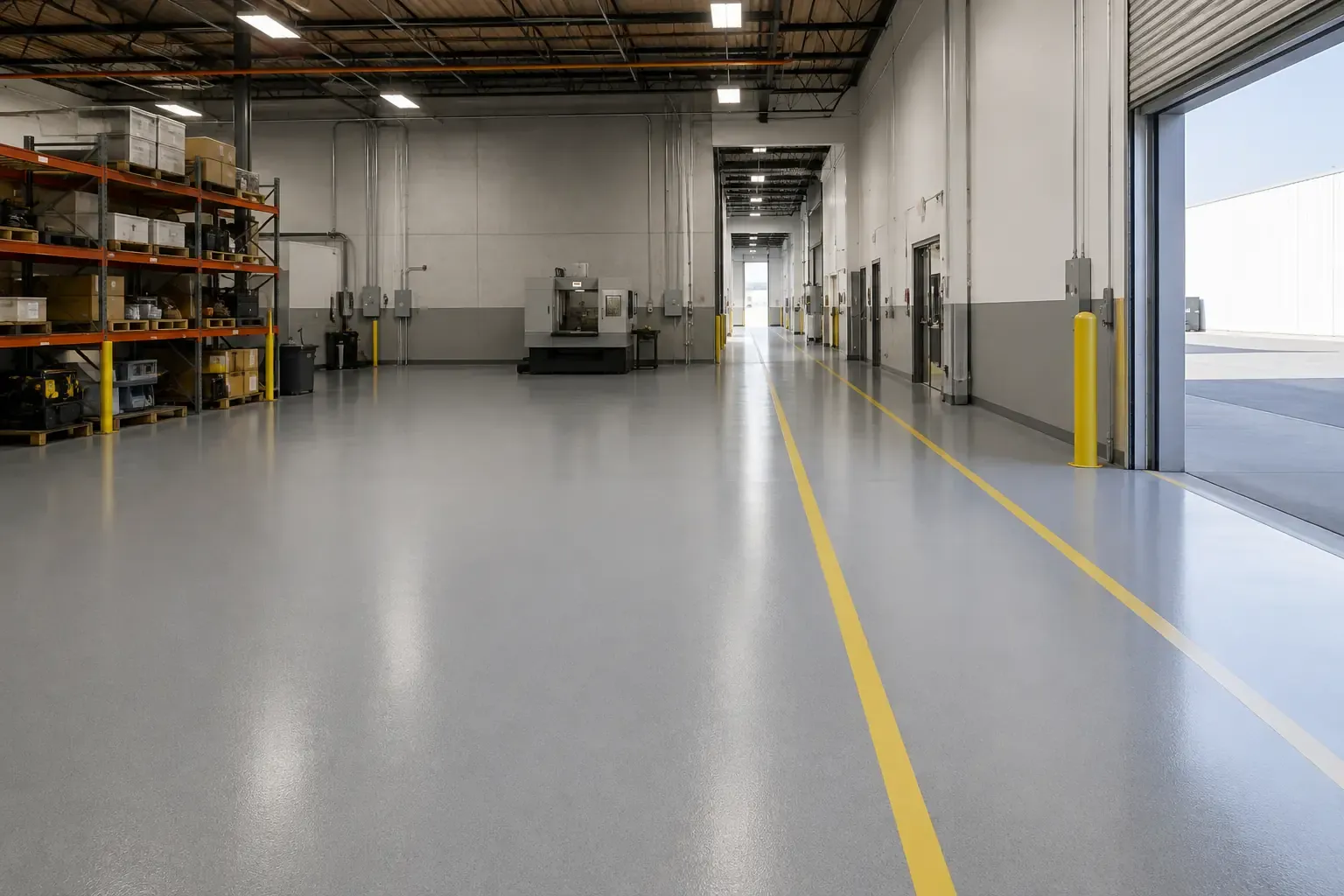
Aerospace production depends on clean, controlled work spaces, and the floor underneath is part of that. Bare concrete sheds dust, soaks up cutting fluid and hides dropped hardware. A seamless coated floor stops the dust, resists the chemicals, cleans thoroughly and shows you anything that should not be there. We install epoxy and polyaspartic floor systems for aerospace machine shops, parts manufacturers, assembly areas and suppliers across the western Inland Empire.
Spaces We Coat
The industrial corridor through Ontario, Chino and Fontana is home to many aerospace suppliers and machine shops. Typical areas include:
- Machining and CNC floors. Coolant, cutting oil and metal chips are constant, and the floor needs to resist them without staining or softening.
- Assembly and kitting areas. A bright, low-dust floor keeps work areas clean and makes small parts easy to find if they are dropped.
- Inspection and quality rooms. Light, even floors improve visibility and keep dust off the work.
- Shipping, receiving and stores. Pallet jacks and forklifts need a tougher, thicker build in the traffic lanes.
- Wash, paint-prep and chemical areas. These get a system chosen for the specific solvents and cleaners in use.
Specified to Your Process
Aerospace facilities rarely need a single floor for the whole building. We start by asking what each area handles: which chemicals, what wheel loads, whether parts are sensitive to static, and how the floor is cleaned. From there we specify the build, heavier where equipment and traffic concentrate and standard where they do not, so you are paying for performance where it matters. If your process calls for static control, a clean-room-adjacent finish or a particular industry specification, send it to us early. We will tell you plainly which parts of it we can meet.
Keeping Debris Off the Work
Foreign object debris is a constant concern in aerospace work. A light-colored, seamless floor makes a dropped fastener, safety-wire clipping or chip obvious against the finish, and it sweeps and scrubs completely clean instead of trapping debris in pits and cracks. Sealing the concrete also stops the fine dust that bare slabs continually release, which keeps it off parts, fixtures and freshly cleaned surfaces.
Striping and Work-Zone Markings
We can mark aisles, forklift lanes, pedestrian walkways, keep-clear zones around machines, and color-coded areas for quarantine, inspection or finished goods. All markings are sealed under the clear topcoat, so they stay legible through daily cleaning and traffic.
Installed Around Production
Downtime in a production facility is expensive, so the schedule drives the plan. We phase floors in sections, work nights, weekends and planned shutdowns, and use fast-curing polyaspartic topcoats where the return-to-service window is short. Every job starts with diamond grinding, crack and joint repair, and a moisture check, because a coating is only as reliable as the slab under it. Our article on why surface preparation matters covers the details.
Related Services
If you operate an aircraft hangar or maintenance hangar, see our page on aircraft hangar floor coatings, which covers hydraulic fluid, tire loads and hangar layout. For general warehouses, retail and shop floors, see commercial epoxy flooring.
Talk Through Your Facility
Tell us the size of the space, what goes on in each area and any specifications your floor has to meet. Inland Epoxy is licensed and insured, and estimates are free. We will walk the facility, look at the slab and give you a written proposal covering the system, scope and schedule.
Aerospace Facility Flooring Questions
Can you install a static-control (ESD) floor?
ESD floors are a specialized system with conductive layers, grounding and resistance testing, and the right one depends on the standard your facility works to. If your process requires static control, send us your specification and we will tell you plainly whether we can meet it, rather than putting down a standard coating and calling it ESD.
Will the floor hold up to cutting fluids and solvents?
Coolants, cutting oils, degreasers and cleaning solvents are routine in aerospace machining, and each one affects coatings differently. We choose the resin and topcoat for the chemicals you actually use, and we can build thicker, more resistant layers around machines and wash stations where exposure is heaviest.
Why does a coated floor matter for quality control?
Bare concrete constantly sheds fine dust, and it can end up on parts, in assemblies and in paint or bonding areas. A sealed, seamless floor stops that dust at the source, cleans more thoroughly, and makes dropped hardware or debris easy to spot before it ends up where it should not be.
Can the work be done without shutting down production?
Usually, yes. We phase larger floors in sections, work nights, weekends and planned shutdowns, and use fast-curing polyaspartic topcoats where the return-to-service window is tight. We plan the sequence around your production schedule before any work begins.
Where We Install
We install aerospace facility flooring throughout the Western Inland Empire.
Ready to Upgrade Your Concrete?
Let's create a floor that looks incredible and stands up to real life.