

Epoxy & Polyaspartic Garage Floor Coatings in Upland, CA
Licensed & insured · Free written estimates · Serving Upland and the Western Inland Empire
Upland’s Garage Floors, Decade by Decade
Most of the housing here went up between the 1950s and the 1970s — the median home in the city dates to the late seventies — which means a large share of garage slabs are now past the half-century mark. Concrete that age was often poured without a vapor barrier, and decades of ground moisture, settling and daily use show up as hairline cracks, surface dusting and flaking paint from long-ago DIY projects. Up near the foothills and around the 210, construction from the 2000s sits on younger, tighter slabs, though those often carry curing-compound residue that has to come off before any coating will bond. Our process accounts for both. We grind every floor to expose clean concrete, handle concrete repair where cracks and spalls need attention, and check moisture before a drop of material goes down.
Floor Coating Services for Upland Homes & Businesses
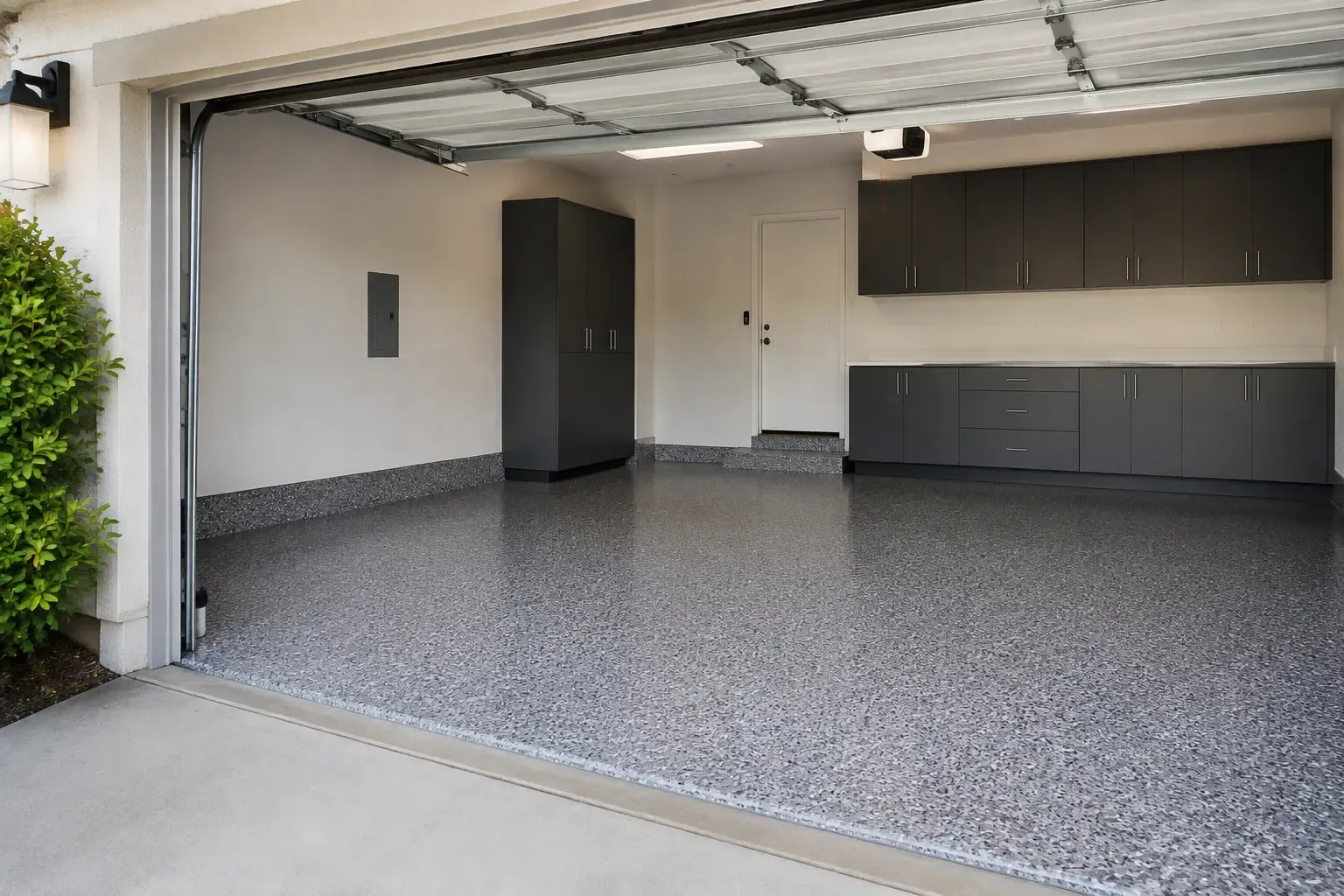
For garages, the workhorse system is a full-flake floor: garage floor coatings built over a ground and repaired slab, finished with a chemical-resistant topcoat that shrugs off hot-tire pickup, oil drips and road grime. Homeowners who need the space back quickly tend to choose polyaspartic floor coatings, which cure fast and hold their color in the sunlight that pours through an open garage door all afternoon. For work spaces — the auto shops and service businesses along the Route 66 stretch of Foothill Boulevard, storefronts near Second Avenue, or the light-industrial suites out by Cable Airport — we install commercial epoxy flooring built for foot traffic, rolling loads and frequent washdowns. Every job gets the same preparation standard: the slab is diamond-ground until it can genuinely grip a coating, then the system goes up in full, measured coats.
Neighborhoods We Serve in Upland
We work across the whole city, from the craftsman and bungalow blocks around Historic Downtown — the district centered at Second Avenue and Ninth Street that hosts the Lemon Festival — up the Euclid Avenue corridor, where the tree-lined median and its old bridle path run north toward the mountains. Above 24th Street we serve San Antonio Heights — the unincorporated foothill community just north of the city line — where mid-century ranches and custom homes sit closest to Mt. Baldy. On the northeast side, the Colonies planned community near Campus Avenue and the 210 gives us some of the area’s youngest slabs, while the homes around Upland Hills Country Club and the streets near Cable Airport on the west end round out the neighborhoods we cover. Wherever you are in town, the drive is short and the site visit is unhurried.
Working Below Mt. Baldy: Heat, Wind and Cure Times
The weather here is classic foothill: long, dry summers that push slab temperatures up, Santa Ana winds in the fall, and cool winter mornings when air drains down off the San Gabriels. Each of those shapes an installation. In summer heat, coatings set faster, so we schedule application for the cooler part of the day and pace the work to match the slab. When the Santa Anas blow, airborne dust is the enemy of a clean finish — we contain grinding dust with vacuum-shrouded equipment and close the space up before topcoats go on. Cooler months favor polyaspartic chemistry, which cures reliably across a wider temperature range than traditional epoxy; if you are weighing the two systems, our guide to how epoxy and polyaspartic compare walks through the differences honestly. The dry climate is genuinely good for this work — most weeks of the year are install-friendly, and we plan around the exceptions rather than pushing through them.
If you are considering a new floor for a garage, shop or business in Upland, we would like to look at your concrete. We will walk the space, check the slab’s condition and moisture, answer your questions about color and texture, and follow up with a clear written proposal — a free estimate with no pressure and no surprises.
FAQs — Upland
My Upland house was built in the 1960s and the garage slab has cracks. Can it still be coated?
More often than not, yes. More than half the homes in town date from the 1950s through the 1970s, so aging slabs are the norm here, not the exception. We grind off surface damage, fill cracks and spalls, and test for moisture before anything else happens. If we find a problem a coating cannot fix — active structural movement, for example — we will tell you plainly before any work begins.
Does summer heat in Upland change how the coating is installed?
It changes how we schedule, not whether we can install. A hot slab shortens a coating's working time, so on 90-plus degree days we start early and pace the application to match conditions. Polyaspartic topcoats handle a wide temperature range, which is one reason we rely on them in this climate.
I live in the Colonies and we have an HOA. Do I need approval for a garage floor coating?
Interior garage floors usually fall outside HOA architectural rules, but every association writes its own CC&Rs, so it is worth a quick check before you book. If your HOA asks for documentation, we are glad to provide proof of licensing and insurance ahead of the work.
Do you serve San Antonio Heights and the streets above 24th?
Yes. San Antonio Heights — the unincorporated county community just north of the Upland city line — and the foothill blocks above 24th Street are part of our service area along with the rest of the city. Winter mornings run cooler up the hill, which occasionally shifts a start time, and we confirm scheduling details with you when we book.
Ready to Upgrade Your Concrete?
Let's create a floor that looks incredible and stands up to real life.