

Garage Floor Coatings in the Inland Empire
What a Full-Flake Garage Floor System Is
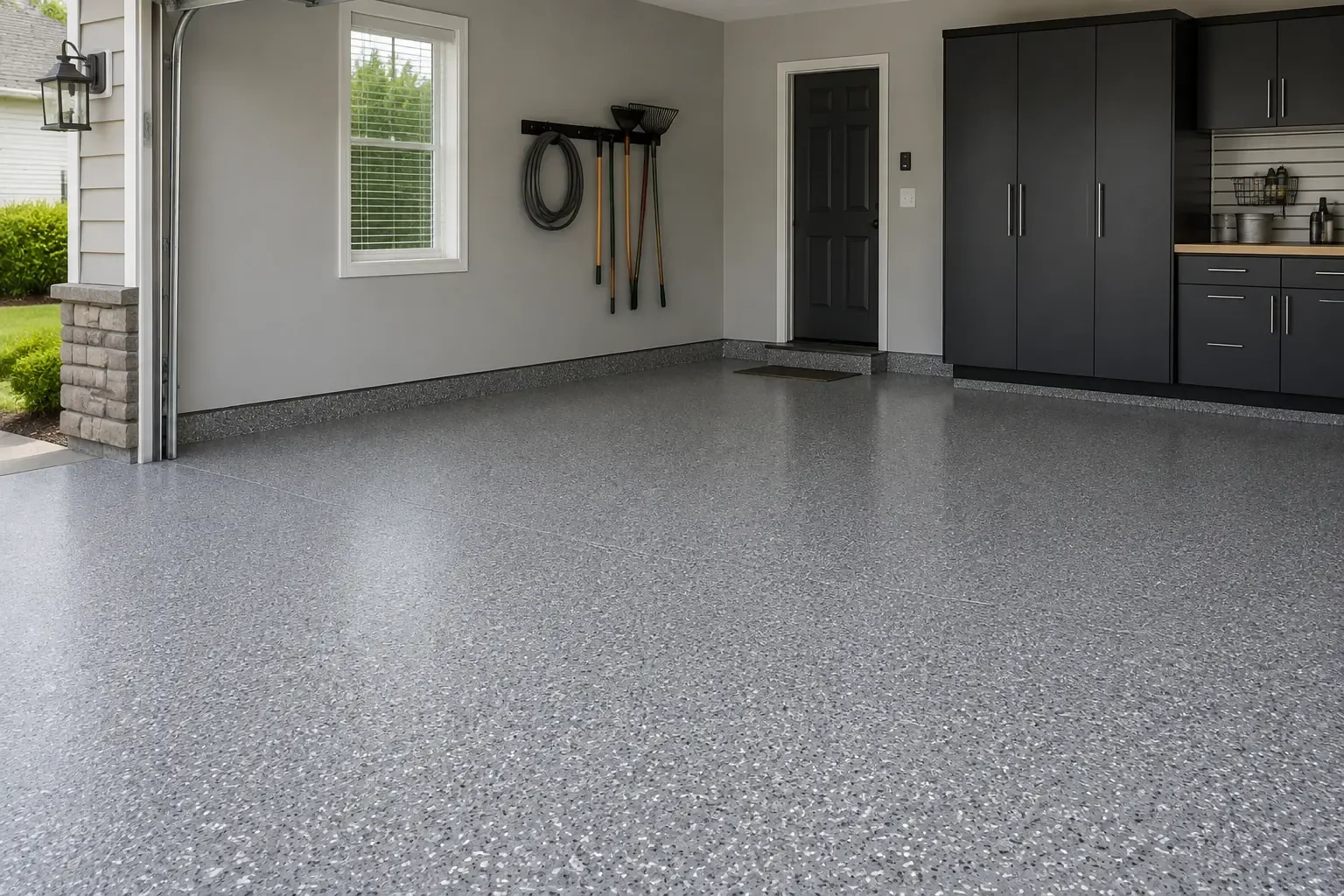
A full-flake floor is a multi-layer coating system built directly into your concrete — not a coat of paint sitting on top of it. We start by diamond-grinding the slab to strip old sealers and contamination and create the ideal profile for maximum adhesion. Cracks, spalls, and pits are filled and ground flush. From there we roll on a pigmented base coat, broadcast vinyl color flake into the wet coating until the floor is completely covered, scrape and vacuum the excess once it cures, and lock everything down under a clear, chemical-resistant topcoat.
The finished floor has real thickness and texture. The flake hides minor imperfections in the slab, adds slip resistance underfoot, and gives the surface the speckled, granite-like look most people picture when they imagine a properly finished garage.
Why Homeowners Choose a Coated Garage Floor
Bare concrete is porous. Oil, coolant, and brake fluid soak in and leave stains that never fully come out, and the surface constantly sheds fine dust that gets tracked into the house. A coated floor seals all of that off — spills sit on top until you wipe them up, and cleanup becomes a dust mop or a quick rinse instead of a degreaser and a stiff brush.
Heat is the other reason. Inland Empire summers regularly push past 100 degrees, and hot tires will soften and peel garage floor paint and thin roll-on kits — the failure known as hot-tire pickup. A ground, properly coated floor resists it. That matters in a region where the garage often doubles as a gym, a workshop, or the household’s main storage space. We install these systems on everything from older slabs in Upland to newer tract homes in Fontana.
Color and System Options
Most garages get a full flake broadcast, but it is not the only choice:
- Flake systems. Blends of several flake colors over a coordinating base coat. This is the workhorse finish — it hides dust and minor slab flaws better than anything else and stays looking clean between washes.
- Solid color. A single-tone epoxy or polyaspartic finish for a clean, commercial look. It shows dust more readily than flake but suits garages that get squeegeed and kept showroom-tidy.
- Metallic. Metallic pigments hand-worked through clear resin for a flowing, one-of-a-kind surface. Usually chosen for showpiece garages and interior spaces rather than daily-driver parking.
We bring physical flake samples to every estimate so you can judge colors against your own walls and cabinets instead of a screen.
Preparation Is What Makes It Last
Nearly every failed garage floor fails at the bond line, not in the coating itself. Acid etching, skipped repairs, and coating over old sealer all leave a weak surface that lets go the first hot summer. We grind every floor mechanically with diamond tooling, check the slab for moisture, and complete repairs before any product goes down. A slab poured sixty years ago needs different prep than one poured five years ago, and we adjust the grinding, repair materials, and coating build to match.
If you want the longer explanation, our guide on why surface preparation matters walks through what proper grinding looks like — and the shortcuts to watch for in any bid you receive.
What to Expect During Installation
Most two-car garages take one to two days. Before we arrive, the garage needs to be emptied — we can advise on what to do with heavy items during the estimate. Day one is the loud one: grinding, crack repair, base coat, and flake broadcast. Day two we scrape the floor smooth and apply the topcoat, then inspect every detail and leave the space clean.
Foot traffic is typically fine the following day; vehicles take longer, and we will give you straight guidance based on the products used and the weather, since cure times shift with temperature. Whether your topcoat should be epoxy or polyaspartic depends on your slab, your timeline, and the season, and we walk through those trade-offs with you in plain terms during the estimate.
Start With a Free Estimate
If you are budgeting the project, our breakdown of how much epoxy flooring costs explains what actually drives the price of a garage floor. When you are ready, we serve homeowners across the western Inland Empire, from the foothill neighborhoods of Rancho Cucamonga to Chino and Pomona. We will walk your floor, check the slab’s condition, and give you a clear written estimate — free, with no pressure to decide on the spot.
Garage Floor Coatings Questions
How long does a garage floor coating take to install?
Most two-car garages take one to two days. The first day covers grinding, crack repair, the base coat, and the flake broadcast; the second day we scrape the floor and apply the topcoat. Cure times shift with temperature, so we confirm the exact schedule after we see your floor.
When can I park on my new garage floor?
Light foot traffic is usually fine within about a day. Vehicles need to stay off longer so the topcoat can reach full hardness — polyaspartic topcoats generally allow a faster return than standard epoxies. We give you specific timing for the products used on your floor rather than a one-size-fits-all answer.
Will a coating fix the cracks in my concrete?
We fill and grind cracks, spalls, and pits flush before any coating goes down, which keeps them from telegraphing through the finish. A coating is not a structural repair, though — if a slab is actively moving or heaving, we will tell you honestly before work starts.
What is hot-tire pickup, and how do you prevent it?
Hot-tire pickup is when warm tires soften a weak coating and peel it off the slab as they cool. It almost always traces back to poor adhesion. We diamond-grind the concrete to open the surface and use coatings formulated to resist tire heat, which is what keeps a floor down through hot Inland Empire summers.
Can you coat an older garage slab?
Usually, yes. Older slabs tend to need more grinding and repair, and sometimes a moisture-tolerant primer, but age alone is rarely a dealbreaker. We evaluate the slab's condition during the estimate and tell you plainly if a floor is not a good candidate.
Where We Install
We install garage floor coatings throughout the Western Inland Empire.
Ready to Upgrade Your Concrete?
Let's create a floor that looks incredible and stands up to real life.