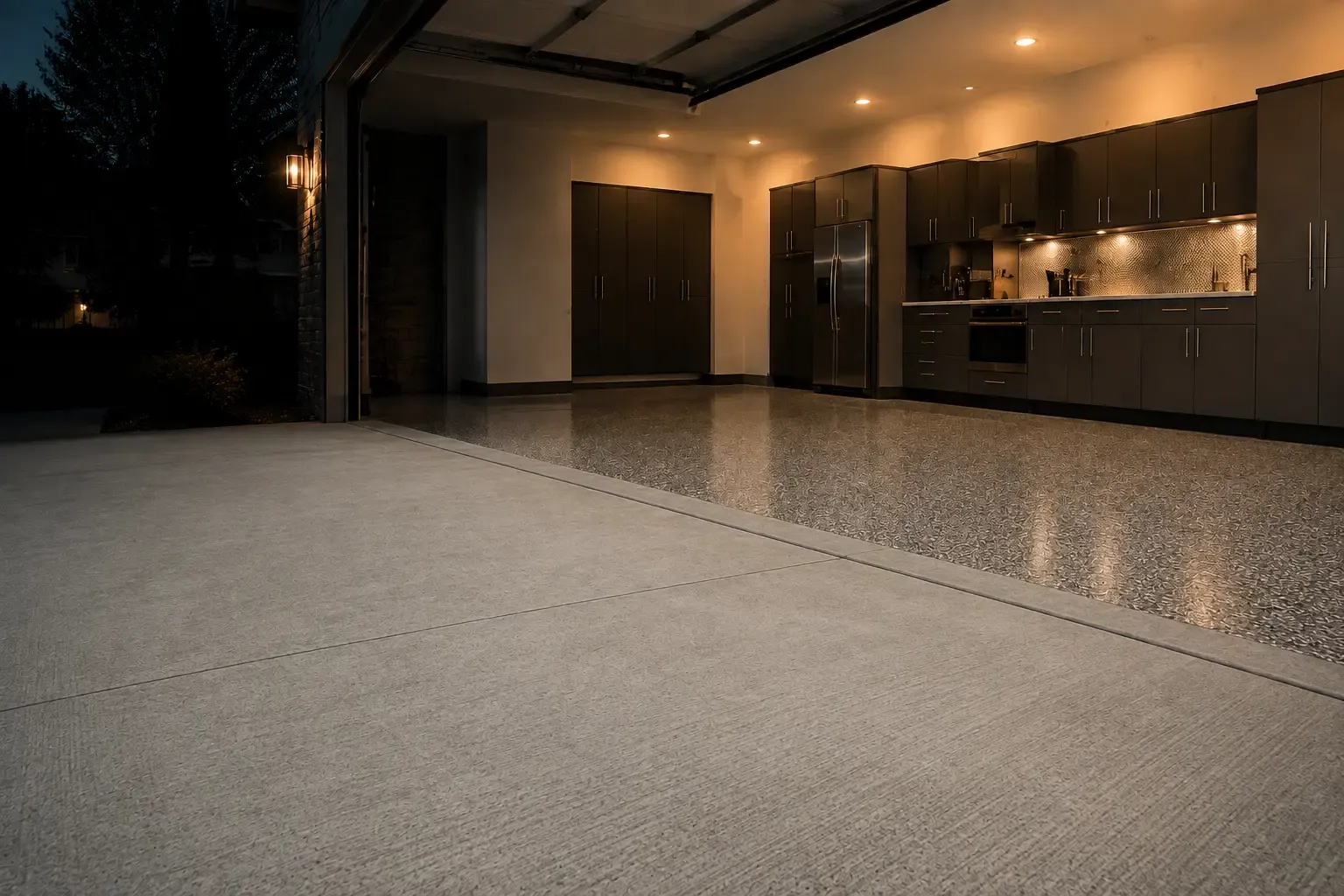

Why Surface Preparation Makes or Breaks Your Floor
Ask anyone in the coatings industry what causes floors to fail and you’ll hear the same answer: the coating rarely fails — the bond does. That bond is decided before any product touches the slab, during surface preparation.
What Proper Preparation Looks Like
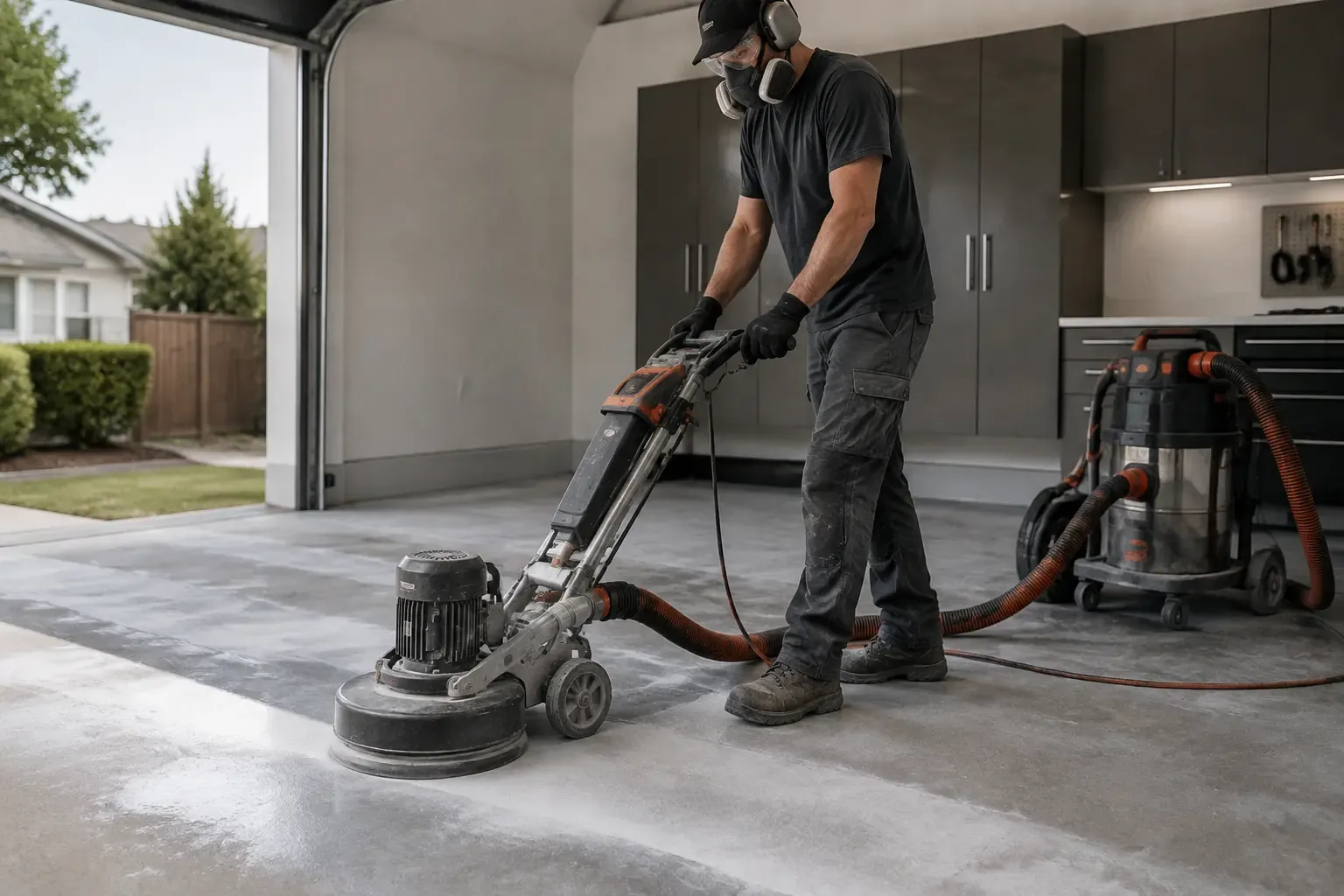
1. Diamond grinding
We mechanically grind every floor to remove laitance, old sealers and contamination, opening the concrete’s pores so the coating can key into the slab itself. Acid etching — the shortcut some installers use — simply can’t produce the same profile.
2. Crack and defect repair
Cracks, spalls, pits and joints are cut out, filled and ground flush. Coating over a defect doesn’t hide it for long; repairing it makes the surface genuinely smooth and solid.
3. Moisture and condition checks
Concrete transmits moisture from the ground below. We check the slab’s condition before installation so the right primer or moisture barrier goes down first — not after a problem appears.
The 80/20 of floor coatings: roughly 80% of a floor’s long-term performance is decided by preparation, and only 20% by the topcoat everyone sees.
The Cost of Skipping It
A floor installed over unprepared concrete can look great on day one and start peeling within a season. Hot tire pickup, flaking around cracks and whitish blisters are almost always bond failures — and fixing them means stripping the floor and starting over.
How We Do It
Preparation is built into every Inland Epoxy estimate — see our concrete repair and preparation service for what that involves. We grind, repair and verify every slab before installation, and we walk the finished floor with you when we’re done. That’s how a coating earns decades of service. When you’re ready to plan a budget, our pricing guide covers what drives the cost.