

Aircraft Hangar Floor Coatings in the Western Inland Empire
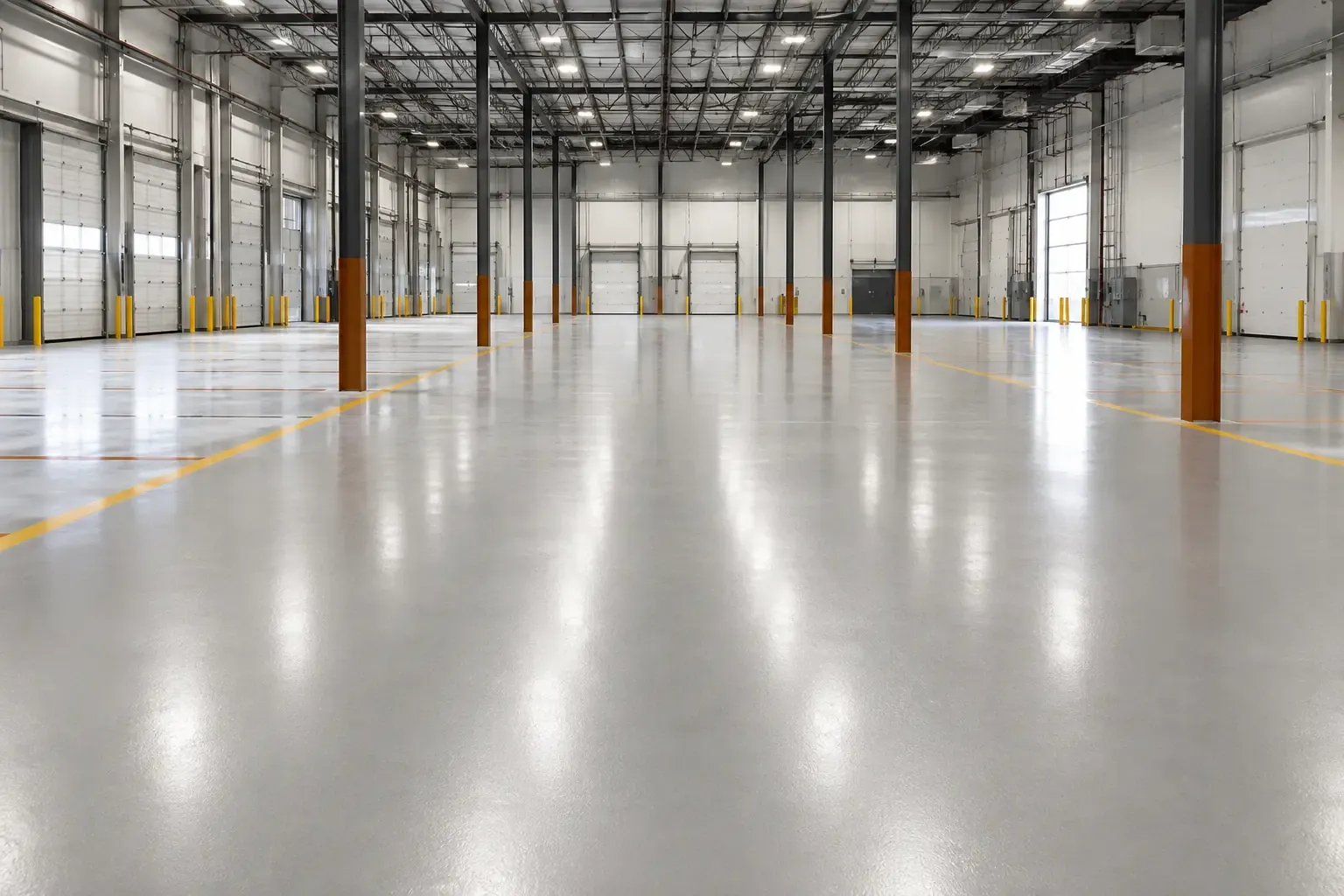
A hangar floor is a work surface, a parking spot and an inspection tool all at once. Bare concrete sheds dust into engines and paint booths, soaks up hydraulic fluid and fuel, and hides the dropped washer or cotter pin that should have been found. A properly installed coating turns it into a bright, sealed, seamless floor that sweeps clean and shows you everything that lands on it. We install epoxy and polyaspartic hangar floor systems for private hangars, flight schools, maintenance shops and aviation businesses across the western Inland Empire.
Built for What Happens in a Hangar
Hangar floors see a mix of exposures that a warehouse or garage never does. We specify the system around them:
- Hydraulic fluid and fuel. Phosphate-ester hydraulic fluids and jet fuel attack many ordinary coatings. The topcoat has to be chosen for the fluids actually in use, not picked from a catalog of garage colors.
- Heavy, concentrated loads. Tire turns, tugs and jack pads put a lot of weight on a small footprint. Thicker builds go where the loads are, over a ground and repaired slab.
- Hot tire marks. Quality urethane and polyaspartic topcoats resist the tire pickup and staining that ruin cheaper finishes.
- Cleaning and degreasers. A seamless floor with no porous concrete showing lets you mop, squeegee or scrub without the floor absorbing what you are cleaning up.
A Brighter Floor Is a Safer Floor
Most hangar owners choose a light gray or white floor for a practical reason: it reflects the overhead lights up onto the underside of the aircraft. Mechanics see more without dragging portable lights around, and the whole building feels brighter. A light, sealed floor also makes foreign object debris (FOD) easy to spot. A dropped nut, a safety-wire clipping or a fresh drip shows up against the finish instead of disappearing into stained concrete, which is exactly what you want in a space where loose hardware can end up inside an engine.
Striping, Markings and Layout
We can lay out aircraft parking positions, tug and walkway lanes, keep-clear zones around doors and equipment, and fire-extinguisher and exit markings in contrasting colors, sealed under the clear topcoat so they do not wear off. If your hangar has trench drains, we detail the coating into and around them so fluids reach the drain rather than creeping under the floor at the edges.
Surface Preparation Comes First
Most coating failures in hangars trace back to the slab, not the product. Older hangar floors are often stained with years of oil and fluid that has to be dealt with before anything will bond. We diamond-grind the concrete to open the surface, repair cracks, spalls and joints, and check for moisture coming up through the slab before a coating goes down. Our article on why surface preparation matters explains why we will not skip this step.
Near the Region’s Airports
The western Inland Empire has a lot of aviation packed into a small area: Chino Airport sits just south of Chino, Ontario International anchors Ontario, Cable Airport is in Upland, and Brackett Field is a short drive from Pomona. Whether you have a single T-hangar or a large maintenance hangar, we can walk the floor, talk through how you use it and give you a written proposal.
Hangar Floors and Other Aviation Spaces
This page covers the hangar floor itself. If you run an aerospace machine shop, parts manufacturing floor or a production space, those have different requirements, from static control to chemical resistance for process fluids. See our page on aerospace facility flooring. For general warehouses, shops and retail spaces, see commercial epoxy flooring.
Get a Straight Answer on Your Hangar Floor
Tell us the size of the hangar, what aircraft and equipment use it, and which fluids end up on the floor. Inland Epoxy is licensed and insured, and estimates are free. We will look at the slab, recommend a system that suits how you use it and put the scope and schedule in writing.
Aircraft Hangar Floor Coatings Questions
Will hydraulic fluid damage an epoxy hangar floor?
Standard garage-grade epoxy can soften and stain under phosphate-ester hydraulic fluids like Skydrol, which is why hangar floors need a topcoat chosen for that exposure. Tell us which fluids, fuels and cleaners are used in the hangar and we will specify a system that is rated for them, rather than a general-purpose coating.
Why do hangar floors usually use a light color?
A light gray or white floor bounces overhead light back up onto the underside of wings and fuselage, which makes inspection and maintenance work easier and reduces the need for portable lights. It also makes dropped hardware, fluid leaks and debris stand out immediately.
Can the coating handle aircraft tires and jacks?
Yes, when the build is specified for it. Tire turns and jack pads concentrate a lot of weight on a small area, so we grind the slab to a proper profile, repair cracks and joints first, and use a thicker high-build system in the areas that take the heaviest loads.
How long will the hangar be out of service?
It depends on size, slab condition and the system. Polyaspartic topcoats cure faster than standard epoxy, so foot traffic returns sooner, with a longer wait before aircraft are rolled back in. Larger hangars can be phased so part of the floor stays in use. We give you a written timeline before work starts.
Where We Install
We install aircraft hangar floor coatings throughout the Western Inland Empire.
Ready to Upgrade Your Concrete?
Let's create a floor that looks incredible and stands up to real life.